
Press Releases
- Details
- Category: Press Releases
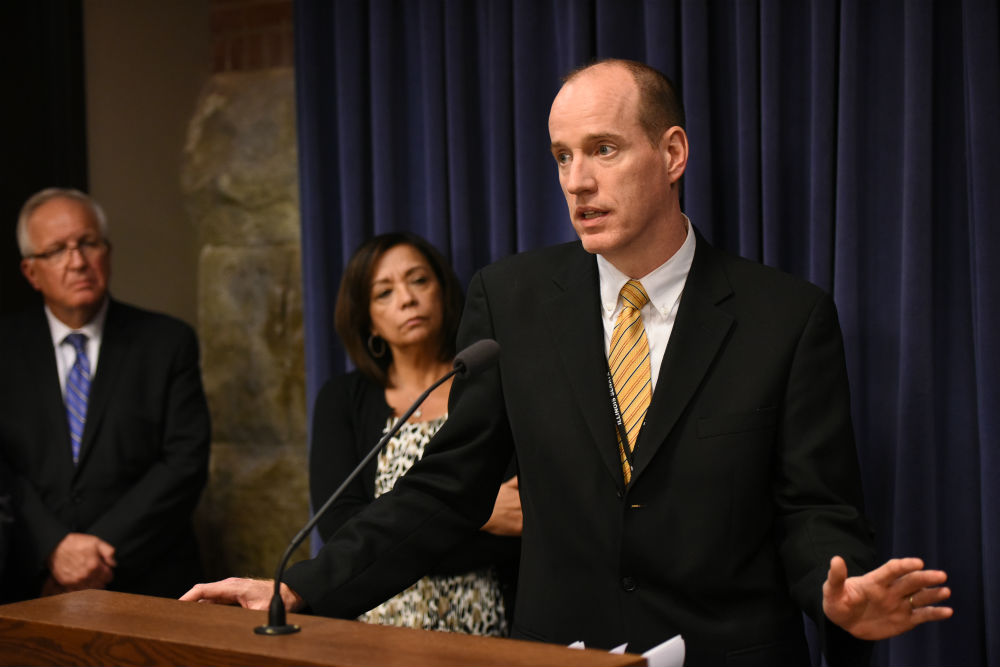 CHICAGO – The school districts of Evergreen Park and Worth will be eligible to receive property tax relief thanks to a state grant program, State Senator Bill Cunningham announced Friday.
“One of the top issues in our state right now is the need to find new solutions to our sky high property tax rates,” said Cunningham, a Democrat who represents portions of Chicago and the southwest suburbs. “This program is a critical step toward bringing those rates down in some of the highest taxed school districts in Illinois.”
Evergreen Park Community High School District 231 will receive $668,831 in grant funding while Worth School District 127 will receive $866,277.
The grants will be distributed through the Illinois State Board of Education’s Property Tax Relief Grant program, which seeks to ease the burden on residents of heavily taxed school districts. The amount of the grant then becomes a permanent part of the districts’ yearly base funding amounts going forward.
“The funding available through these grants is going to be a major boost for these school districts for years to come,” Cunningham said. “This is going to help us start shifting some of the school funding burden away from local taxpayers and onto the state.”
More information about the Property Tax Relief Grant is available at https://www.isbe.net/proptaxrelief.
- Details
- Category: Press Releases
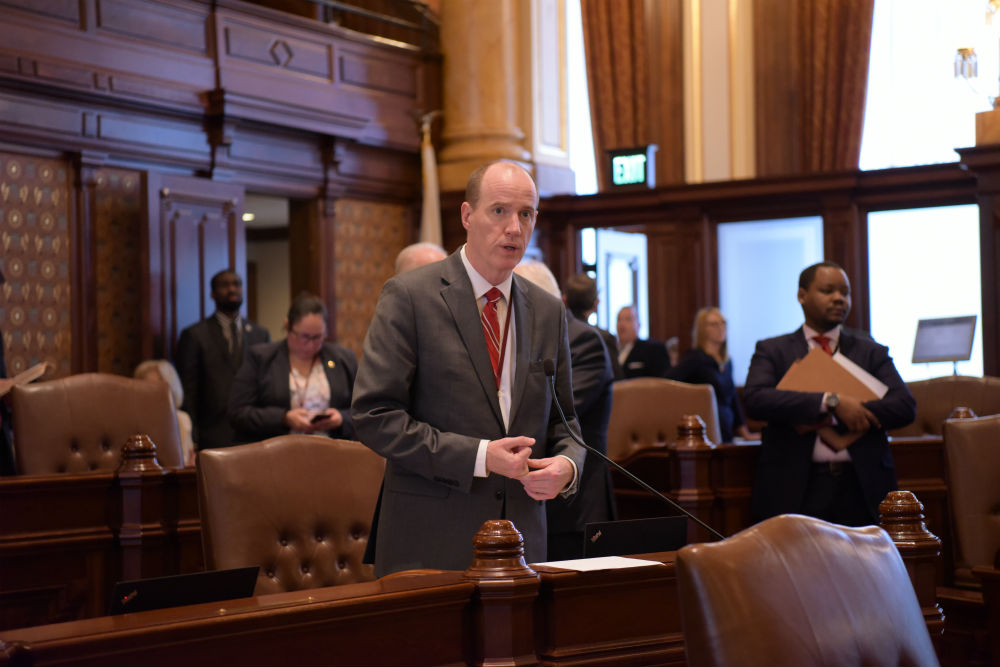 SPRINGFIELD – State Senator Bill Cunningham was named president pro tempore of the Illinois State Senate Tuesday by Senate President Don Harmon.
“I’m honored to have the opportunity to continuing serving in the Illinois Senate as a part of President Harmon’s leadership team,” said Cunningham, a Democrat who represents portions of Chicago and the southwest suburbs. “This is an exciting new role for me and I look forward to the new challenges it brings.”
As Senate president pro tempore, Cunningham will serve as a trusted advisor to the Senate President and a senior member of his leadership team.
“We have a lot of work to do on behalf of the people of Illinois this spring,” Cunningham said. “I’m looking forward to working with President Harmon and my colleagues in the General Assembly to tackle the biggest issues facing our state, including reducing out of control property taxes and reforming our ethics laws to hold those in government accountable.”
Cunningham has represented Illinois’ 18th Senate District since 2013. Prior to joining the Senate, he also served in the Illinois House of Representatives.
- Details
- Category: Press Releases
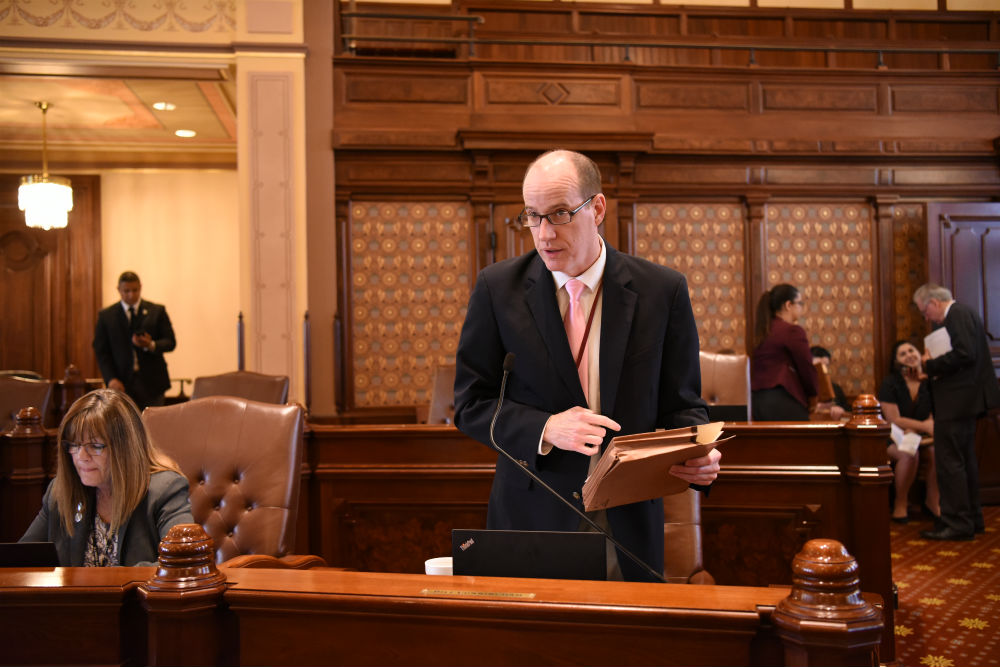 SPRINGFIELD – A measure co-sponsored by State Senator Bill Cunningham that speeds access to a property tax break for seniors was signed into law Tuesday.
House Bill 961 will allow seniors to benefit earlier than originally scheduled from a new law removing the need for Cook County residents aged 65 or older to reapply annually to receive the Senior Citizen Homestead Exemption, a property tax exemption designed to assist senior citizens financially.
Seniors will have to apply only once more for the Homestead Exemption in 2020 before being grandfathered in to the program. A previous law would have required them to reapply through 2021.
“The application process for the Homestead Exemption can be confusing for some people and it just doesn’t make sense to require it more than once,” said Cunningham, a Democrat who represents portions of Chicago and the southwest suburbs. “Once you turn 65, you’re always eligible for the exemption. We shouldn’t be forcing people to prove that year after year.”
Currently, every county in Illinois other than Cook may allow seniors to receive the exemption without reapplying.
The measure also requires Cook County agencies to record events that would end the exemption, such as property transfers, to ensure that ineligible property owners do not take advantage of the tax break.
House Bill 961 passed the Illinois Senate and House of Representatives without opposition in November.
- Details
- Category: Press Releases
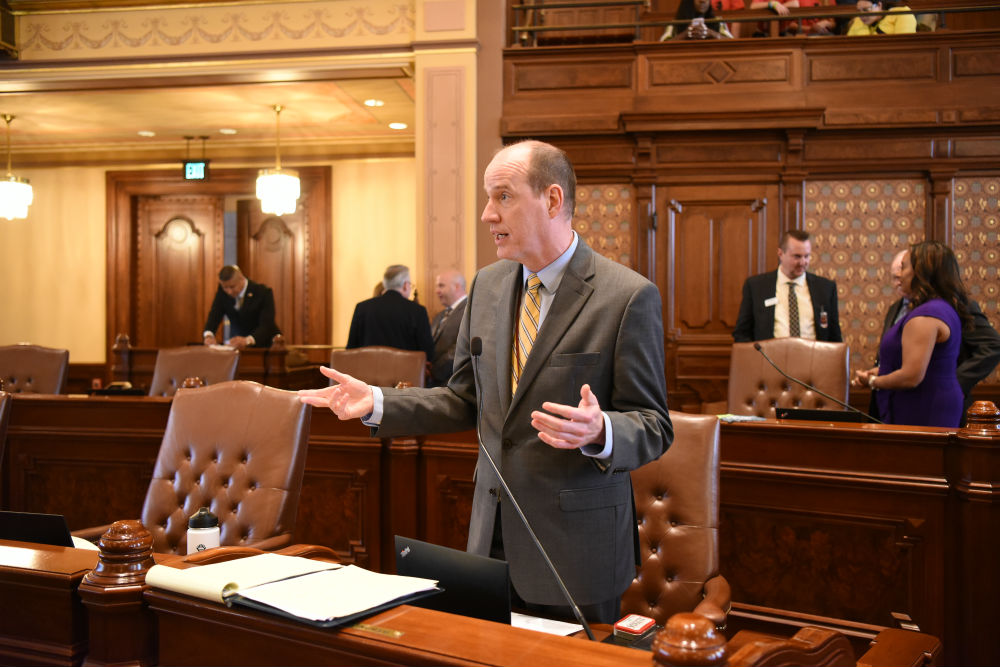 SPRINGFIELD – More seniors will be eligible for certain state benefits under new changes implemented by the Illinois Department on Aging, State Senator Bill Cunningham announced Tuesday.
“Many seniors live on a fixed income, and we need to ensure that all of them have access to the benefits they need,” said Cunningham, a Democrat who represents portions of Chicago and the southwest suburbs. “This program provides valuable assistance to some of the most vulnerable people in our state. Expanding its availability is simply the right thing to do.”
The new rules increase annual income limits to participate in the Benefits Access Program, which includes the Secretary of State license plate discount, seniors ride free transit benefit and persons with disabilities ride free transit benefit. Eligibility for the program is now determined by income as follows:
- For households containing one person, an annual income of less than $33,562
- For households containing two persons, an annual income of less than $44,533
- For households containing three or more persons, an annual income of less than $55,500
For applications submitted between January 1 and April 15, income amounts from 2018 will be used to determine eligibility. For applications submitted after April 15, income amounts from 2019 will be used.
The changes come as part of the bipartisan budget implementation bill passed by the General Assembly last spring. This is the first time the annual income limits for the program have been increased since 2010.
Applications may be submitted online at www.illinois.gov/aging under the “Benefit Access” tab. For assistance, call the Illinois Department on Aging Senior HelpLine at 1-800-252-8966 (hearing impaired call 1-888-206-1327).
- Details
- Category: Press Releases
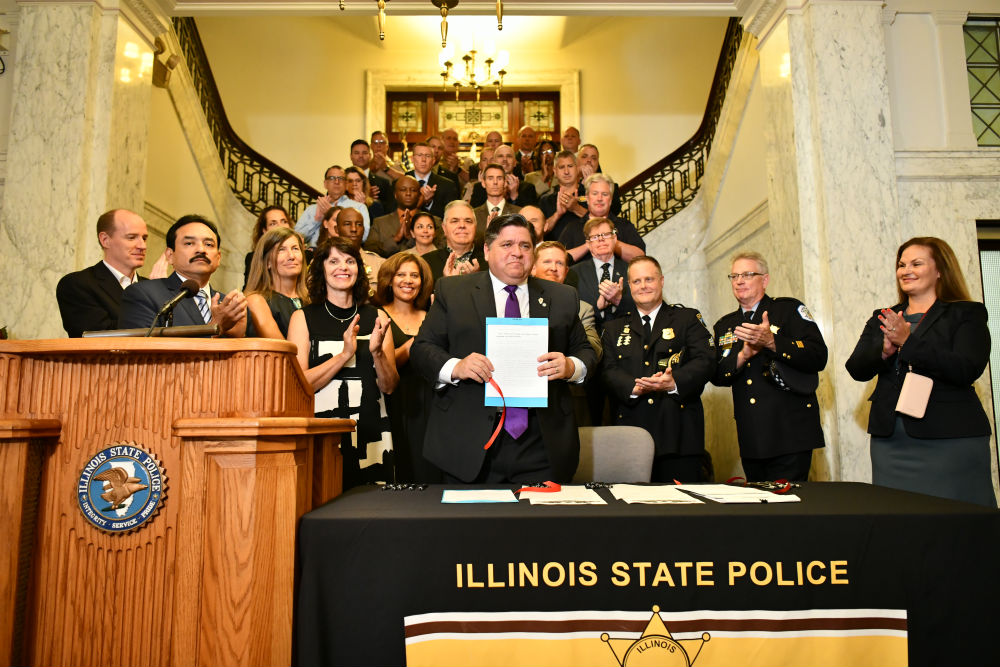 SPRINGFIELD – Illinois law enforcement officers will receive increased wellness and suicide prevention training starting Jan. 1 thanks to a new law sponsored by State Senator Bill Cunningham.
“Suicide and mental health are some of the most serious issues facing our law enforcement community,” said Cunningham, a Democrat who represents portions of Chicago and the southwest suburbs. “This law will help officers recognize these issues and provide them with a better understanding of the mental health resources available to them.”
House Bill 2767 requires the Illinois Law Enforcement Training and Standards Board to develop a course addressing the issues of officer wellness and suicide prevention. The course will be included in the training requirements police officers must complete before graduating the police academy and will also need to be completed every three years after graduation.
The training will include recognizing signs of work-related cumulative stress, issues that may lead to suicide and solutions for intervention with peer support resources.
“Seeking help for these issues isn’t a sign of weakness, it’s a sign of strength,” Cunningham said. “We need to eliminate the stigma surrounding mental health in the first responder community and ensure that everyone has access to the resources they need.”
This year, Cunningham also cosponsored House Bill 2766, the First Responders Suicide Prevention Act, which implements training for individuals tasked with providing peer support counseling to colleagues, requires police and fire departments to develop disciplinary measures for those who violate confidentiality agreements, and creates a civil cause of action for employees whose employment status is adversely affected by information obtained during a counseling session. That law has already taken effect.
Both measures passed the Senate and House with bipartisan support and were signed into law in August.
- Details
- Category: Press Releases
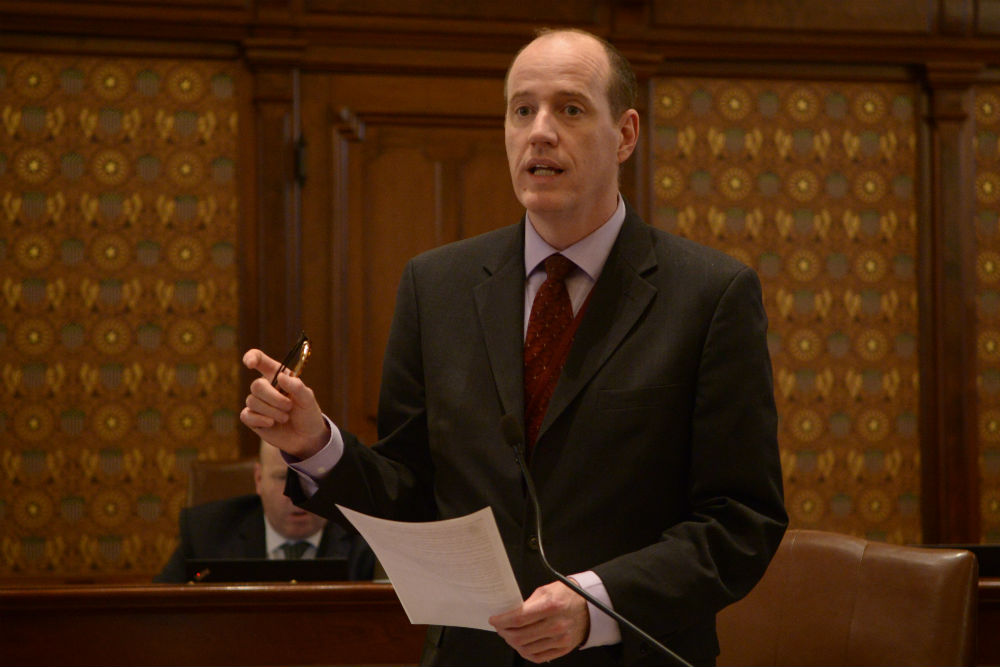 SPRINGFIELD – A requirement forcing Cook County seniors to reapply annually for a tax break will soon be eliminated under a measure co-sponsored by State Senator Bill Cunningham.
House Bill 961, passed by the Illinois Senate Wednesday, would eliminate the need for residents of Cook County residents aged 65 or older to reapply annually to receive the Senior Citizen Homestead Exemption, a property tax exemption designed to assist senior citizens financially.
Seniors would be required to reapply once more for the exemption in 2020, and would then be grandfathered into the program through 2024. Similar legislation, House Bill 833, was signed into law this summer, but required seniors to reapply in both 2020 and 2021.
“Seniors shouldn’t be forced reapply for the Homestead Exemption an extra time. It’s just common sense,” said Cunningham, a Democrat who represents portions of Chicago and the southwest suburbs. “You only turn 65 once, and there’s no reason to put seniors through a confusing reapplication process for this exemption when they’ve already proved that they qualify for it.”
Currently, every county in Illinois other than Cook may allow seniors to receive the exemption without reapplying.
The measure also requires Cook County agencies to record events that would end the exemption, such as property transfers, to ensure that ineligible property owners do not accidentally take advantage of the tax break.
House Bill 961 passed the Senate without opposition. It will now head to the governor’s desk.
- Details
- Category: Press Releases
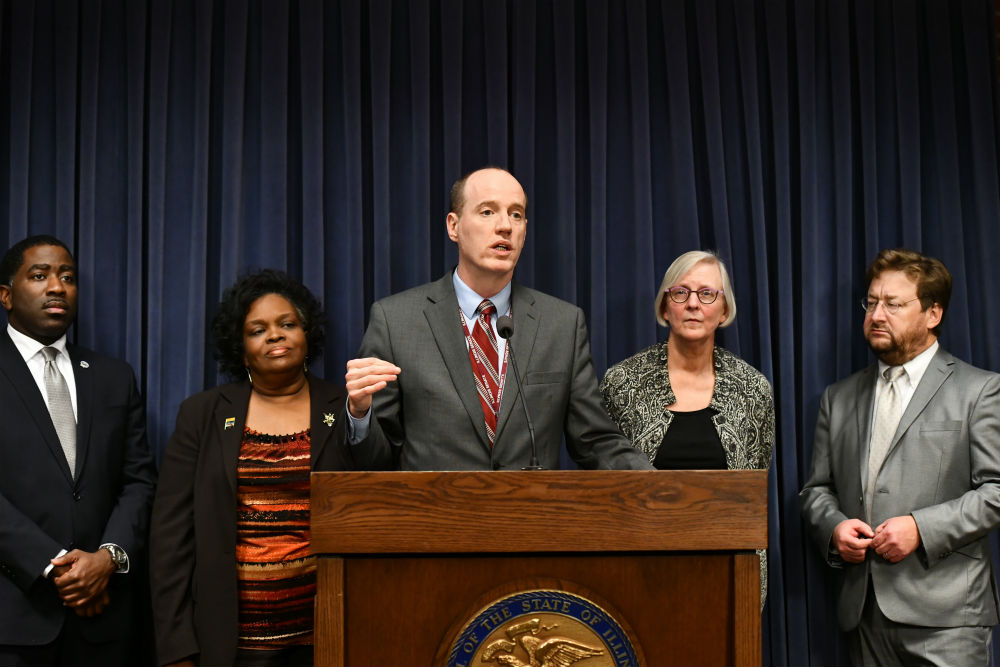 SPRINGFIELD – At a news conference Wednesday, State Senator Bill Cunningham announced the introduction of new legislation aimed at reducing costs and increasing access to public transportation for residents on Chicago’s south side and southwest suburbs.
“Residents on the south and southwest sides, as well as in the suburbs, are underserved when it comes to cheap, reliable methods of public transportation,” said Cunningham, a Democrat who represents portions of Chicago and the southwest suburbs. “We need to ensure everyone has affordable access to public transit and this legislation will provide another option to these communities.”
Senate Bill 2277 would require Metra, Pace, and the CTA to do the following:
- Reduce fares on the Metra Electric and Rock Island lines to CTA levels at in-city stations
- Decrease zone-based fares in the south suburbs on the Metra Electric and Rock Island lines
- Adopt the Ventra card to pay for fares on the Metra Electric and Rock Island lines
- Offer low-cost transfers between the Metra Electric, Rock Island, CTA, and Pace
Cunningham was joined at the news conference by transit equity advocates from the Coalition for a Modern Metra Electric and State Representative Marcus Evans Jr. (D-Chicago), who has introduced similar legislation, House Bill 3834, in the House.
A coalition of community-based organizations, religious groups, chambers of commerce and civic organizations have also signed on in support of the demonstration project.
“I welcome the bill being sponsored by Senator Cunningham. Residents of the south side of Chicago, and the south and southwest suburbs need faster, lower cost access to public transportation to get to work, to school, and to improve the quality of life for people who rely on public transportation,” said Linda Thisted, co-chair of the Coalition for a Modern Metra Electric. “This bill addresses long-standing transit inequities in our communities”
The measure will be considered by the Illinois Senate in the spring.
- Details
- Category: Press Releases
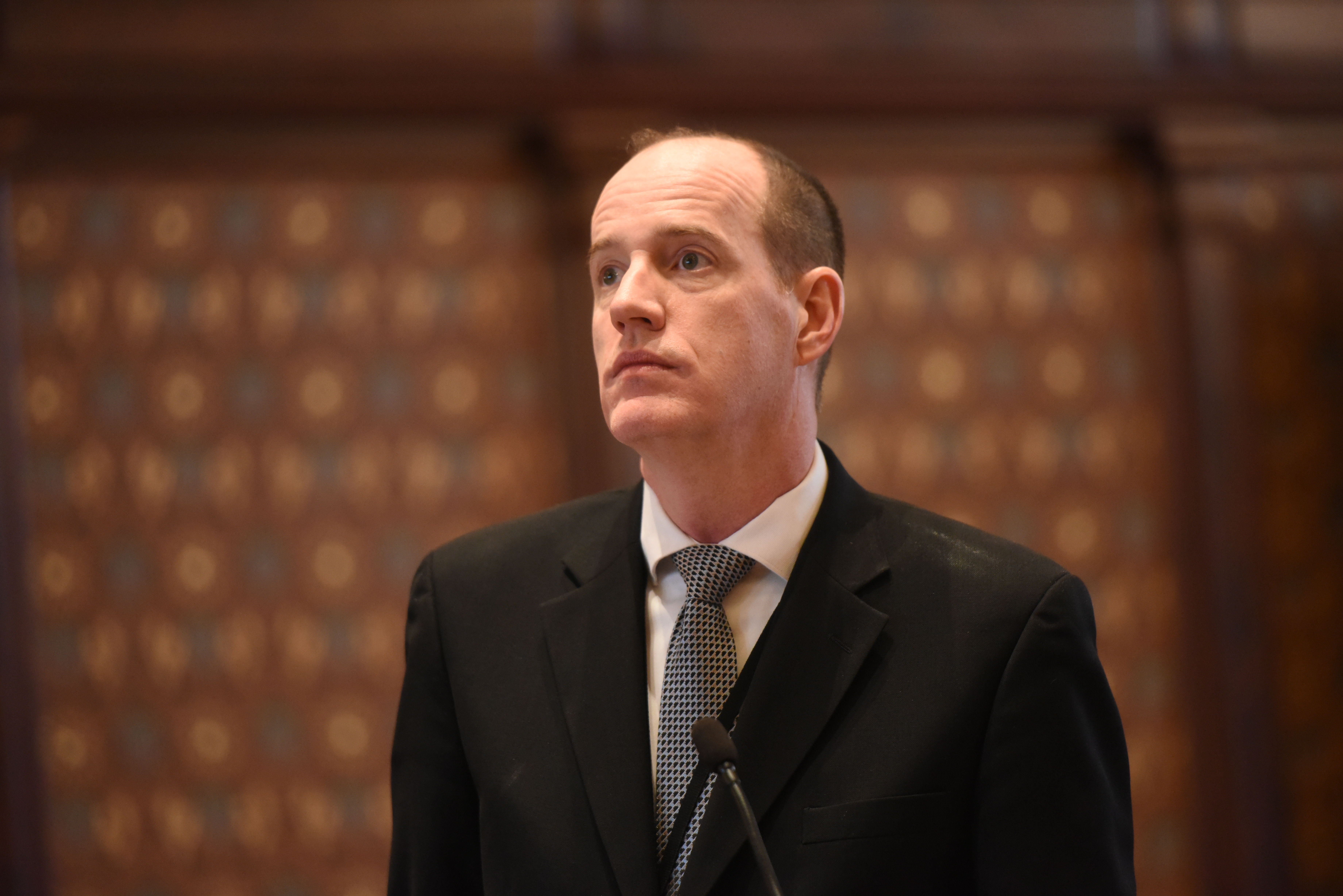 SPRINGFIELD – A bipartisan measure aimed at reducing skyrocketing prescription insulin costs passed the Illinois Senate Tuesday with support from State Senator Bill Cunningham.
“For years, the pharmaceutical industry was virtually unchecked in their efforts to increase profit margins on this drug, and, as a result, working families have struggled to pay for the supply they need,” said Cunningham, a Democrat who represents portions of Chicago and the southwest suburbs. “Legislators need to put people over the profit of corporations, and this legislation allows us to do just that.”
Senate Bill 667 would cap out of pocket insulin expenses at $100 for a 30-day supply and direct the Illinois attorney general to investigate reasons for the increasing costs associated with the medication.
According to the American Diabetes Association, there are more than 30 million Americans with diabetes, 7.4 million of which require prescription insulin every day to survive. However, the increasing costs associated with the medication have led many patients to ration their supply or seek care outside of the country.
“Drug companies are holding diabetics hostage by charging exorbitant rates for a medication they simply can’t live without,” Cunningham said. “No person should be forced to choose between purchasing the insulin they need, and buying groceries or paying their rent. By passing this legislation, we’re taking a step toward ensuring that they won’t have to make that choice in Illinois.”
The legislation would make Illinois just the second state in the nation to cap out of pocket insulin costs for diabetics. Colorado became the first earlier this year.
The measure passed the Senate 48-7. It will now move to the Illinois House of Representatives for further debate.
More Articles …
Page 15 of 37

Follow Sen. Cunningham


eNewsletter Signup
Contact Info
Springfield Office:
Senator 18th District
325-G Capitol Building
Springfield, IL 62706
(217) 782-5145
(217) 782-2115 FAX
District Offices:
10400 S. Western Ave.
Chicago, IL 60643
(773) 445-8128
(773) 672-5143 FAX